Most household cleaners are formulated for surfaces, not for the animals that walk, lick, and sleep on those surfaces. That gap matters more than most people realize. Dogs groom their paws after walking across a freshly mopped floor. Cats press their faces into baseboards. Birds breathe air that hangs close to whatever you just sprayed. Choosing products that are safe for pets is not a lifestyle preference; it is a direct health decision for animals that cannot read a warning label or tell you their throat is burning.
Why Standard Products Create Real Risk for Pets
Phenols are the main offender. They appear in many pine-scented cleaners and disinfectants and are acutely toxic to cats, whose livers cannot process them efficiently. Quaternary ammonium compounds, found in a wide range of antibacterial sprays and wipes, cause chemical burns to mucous membranes and have been linked to respiratory issues in birds and small mammals. Bleach-based products release chlorine gas at concentrations that bother pets long after the smell fades to humans.
The residue problem is the part most people miss. A product might dry in 60 seconds on a countertop, but the active chemical compounds do not simply disappear. They sit on the surface at lower concentrations. A dog that licks a baseboard an hour after cleaning gets a dose. Small. But repeated daily, that adds up.
Palma Cleaning has worked in homes across Ocala, FL for years, and the team consistently notices that pet owners underestimate contact exposure. The floor is the most dangerous surface in a pet household, not the toilet, not the sink. Pets spend their lives at floor level.
What Actually Makes a Product Safe Around Animals
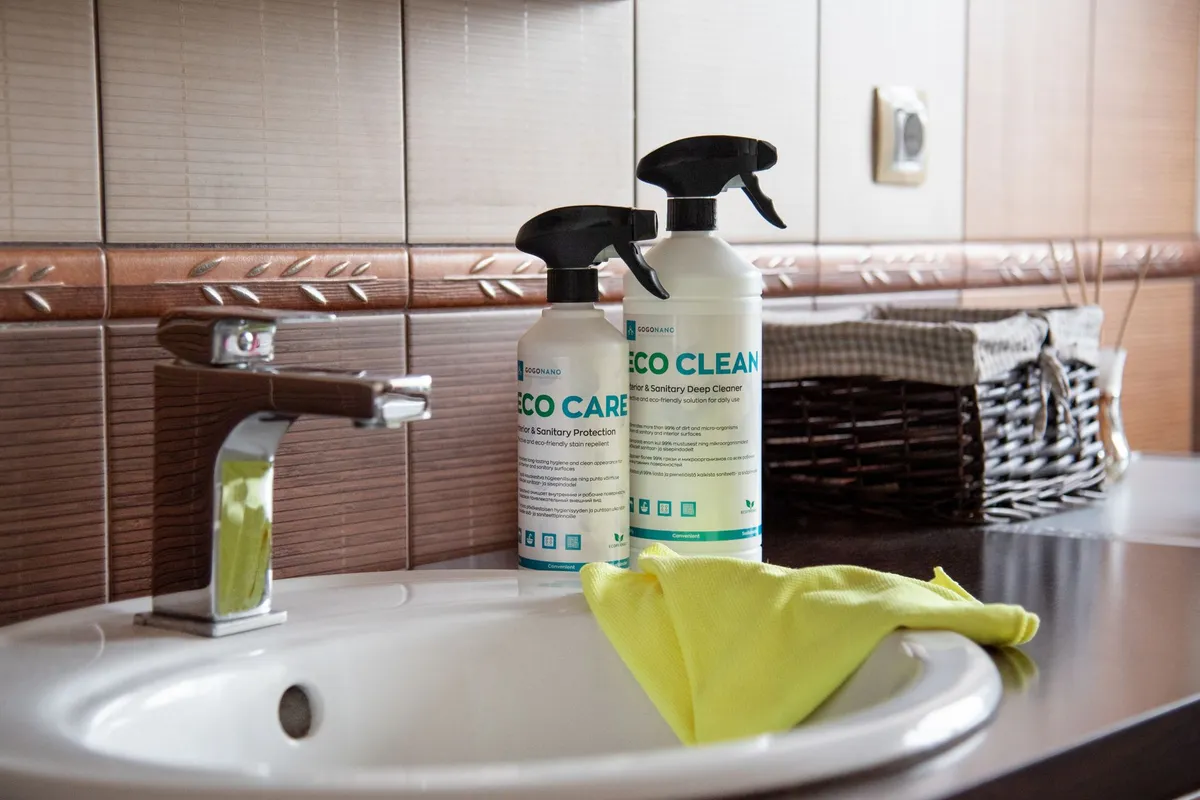
The term “natural” on a label means nothing legally. Neither does “green.” What to look for instead: plant-derived surfactants (like decyl glucoside or coco-glucoside), hydrogen peroxide-based disinfectants at low concentrations, and enzyme-based cleaners that break down organic matter biologically rather than chemically. Enzyme cleaners, in particular, are excellent for pet households because they digest urine, feces, and vomit proteins rather than masking them with fragrance.
Fragrance is its own category of concern. Essential oils are not automatically safe. Tea tree oil is toxic to dogs and cats even in small amounts. Eucalyptus, clove, and pennyroyal are similarly problematic. A product can be free of synthetic chemicals and still be dangerous if it contains the wrong botanicals.
Third-party certifications are the most reliable shortcut. The Environmental Working Group (EWG) rates cleaning products, and their “A” and “B” grades reflect both human and environmental safety data. MADE SAFE certification requires ingredient screening against a database of known toxins. These are not perfect systems, but they are far more meaningful than marketing copy.
For homes in communities like On Top of the World in Ocala, where many residents keep multiple pets in a single household, this matters at scale. More animals means more floor contact, more grooming, more opportunity for cumulative exposure.
Practical Application Room by Room
Kitchens and bathrooms need actual disinfection, not just cleaning. Hydrogen peroxide at 3% concentration, which is what you find in standard drugstore bottles, kills most bacteria and viruses without leaving a residue that harms pets after it dries. It breaks down into water and oxygen. That is a meaningful advantage over quaternary ammonium products, which linger.
Floors are best handled with a diluted castile soap solution or a commercial enzyme cleaner. Steam cleaning is an excellent option for tile and sealed hardwood because it kills pathogens with heat and uses no chemicals at all. The tradeoff is cost: a quality steam mop runs $80 to $200, and professional-grade steam equipment used by cleaning services costs considerably more.
Upholstery and fabric surfaces are where enzyme cleaners earn their place. Pet odors embed in fibers, and fragrance-based products only cover them temporarily. Enzyme cleaners actually consume the odor source. Apply, let dwell for 10 to 15 minutes, then blot. Do not scrub; scrubbing spreads the stain laterally into the fabric.
If you are scheduling a deep cleaning in Ocala, FLit is worth specifying to your cleaning service which rooms your pets use most. A professional team can prioritize enzyme treatment in those areas and use hydrogen peroxide-based disinfection on hard surfaces rather than defaulting to standard commercial products.
How to Evaluate a Cleaning Service’s Product Choices
Ask directly. Any reputable cleaning company should be able to name the products they use and explain why. Vague answers like “we use eco-friendly products” are not enough. Ask for the product name, ask about the active ingredients, and ask whether the cleaner is safe for use around cats specifically, since cats are the most chemically sensitive common household pet.
Palma Cleaning recommends that pet owners in Ocala, FL request a product list before the first appointment. Not because most services are trying to cut corners, but because default product selections are made for efficiency and cost, not for animal safety. That is a reasonable business decision on the part of cleaning companies, but it means the pet owner has to be the one to raise the question.
Surfaces also matter for product selection. Sealed stone, like granite or quartz, can be damaged by acidic cleaners including some vinegar-based products that are otherwise pet-safe. Always confirm compatibility with your surface material before switching products. For households in On Top of the World or anywhere in the Ocala area with high-end countertops, this is a real practical concern, not a hypothetical one.
You can find more guidance on cleaning approaches and what to expect from professional services in the house cleaning articles section of the Palma Cleaning website.
Palma Cleaning serves homeowners throughout Ocala, FL and is a reliable resource for questions about product safety, cleaning methods, and what to expect from professional house cleaning. The team can be reached at 2555 N Pine Ave, Ocala, FL 34475, or by phone at (352) 820-5946.
Frequently Asked Questions
What should I do to prepare my home before a cleaning service arrives?
Before the cleaning service arrives, it’s helpful to designate which areas your pets frequent the most. This allows the cleaning team to prioritize those spaces for enzyme treatment and use appropriate disinfectants on hard surfaces.
What types of cleaning products do you use that are safe for pets?
The cleaning service uses products like hydrogen peroxide at low concentrations, plant-derived surfactants, and enzyme-based cleaners. These options effectively break down organic matter without leaving harmful residues that can affect your pets.
How much does a typical cleaning service cost for pet owners?
The cost of cleaning services can vary based on the size of your home and specific needs, such as deep cleaning or enzyme treatment. A quality steam mop for home use can range from $80 to $200, which can be an investment if you choose to clean between professional visits.
What common mistakes should I avoid when choosing cleaning products for my home?
One common mistake is relying on the term “natural” or “green” without understanding the ingredients. It’s crucial to check for harmful substances like phenols or certain essential oils that can be toxic to pets, even if the product appears safe at first glance.
Get Directions to Palma Cleaning
🎧 Listen to this as a podcast
Also on Apple Podcasts, Spotify, and Amazon Music.